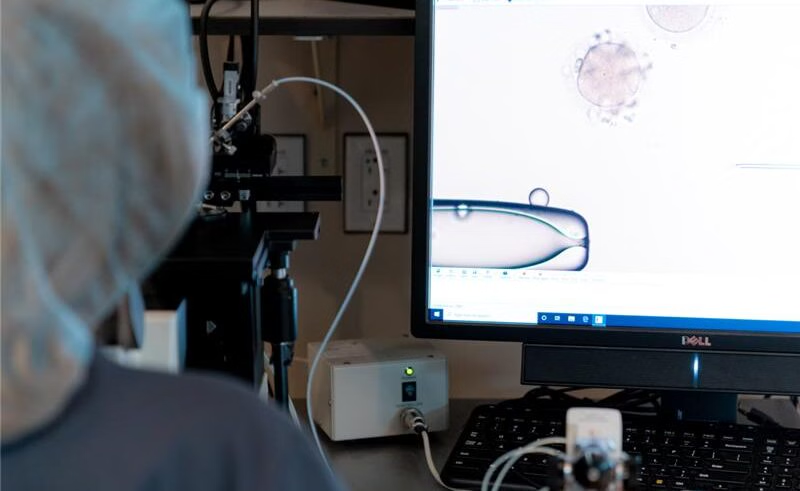
Preimplantation genetic testing for aneuploidy, or PGT-A, screens embryos created through in vitro fertilization (IVF) to see whether they have the correct number of chromosomes (euploid) or an abnormal number (aneuploid). The incorrect number of chromosomes is a common cause of both implantation failure and miscarriage. PGT-A is not a treatment, but rather a selection tool that assists in deciding which embryo to transfer first. Prioritizing euploid embryos increases implantation and live birth rates while reducing miscarriage rates, since most first trimester miscarriages are due to chromosomal abnormalities.
Avoiding futile transfers of clearly aneuploid embryos can save time, emotional stress, and financial cost for IVF patients, allowing them to reach their desire for having a family in a shorter time.
CCRM Fertility has been a leading pioneer in fertility treatment, research, and science for more than 35 years, and has contributed to significant breakthroughs in PGT-A. In 2007, CCRM achieved the world’s first clinical case of PGT-A at the Lone Tree, Colorado flagship location, screening all 23 pairs of embryonic chromosomes with a frozen euploid blastocyst transfer. CCRM Genetics has tested more than 500,000 embryo biopsies, leading to 40,000 live births and counting.
Decades later, the CCRM Fertility team continues to innovate and to emphasize the valuable contribution PGT-A has an embryo selection tool in embryo health and reproductive success.
CCRM’s commitment to advancing fertility care rests on three key pillars: state-of-the-art laboratories, rigorous protocols, and innovative research. This integrated approach allows us to deliver IVF with PGT-A with unmatched precision, expertise, and scientific insight, forming the foundation of CCRM’s comprehensive reproductive care.
In-house proprietary lab and Genetics
Our in-house Genetic and Research laboratories support our IVF laboratories for a truly integrated approach to fertility care. The intertwined, cooperative relationship between these three state-of-the-art labs is a rare find in the field of reproductive medicine and allows us to deliver advanced solutions to our patients.

IVF Lab
CCRM labs feature state-of-the-art technology and extensive quality control measures to create and nurture embryos at every stage. This includes high ratio of embryologists to cycle number, electronic witnessing, proprietary embryo culture system, cryostorage alarm/ID systems, advanced document control practices, and CCRM Secure, our network-wide initiative that ensures all frozen eggs, embryos, and sperm are safe and protected.
Research Lab
CCRM’s Research Lab drives innovation and advances in reproductive medicine, supporting clinical studies and scientific discovery. It conducts quality control testing of IVF lab reagents and plasticware and produces proprietary in-house culture media to ensure optimal lab performance. We also lead an extensive research program for PhDs and MDs, along with innovative clinical trials in translational medicine. Current projects include:
- Oocyte in vitro maturation (IVM)
- Noninvasive PGT
- Embryo-Endometrial Immune matching
Genetics Lab
The CCRM Genetics lab and team’s PGT-A is characterized by our proprietary, custom-built, in-house testing platform designed for unmatched clinical confidence and genetic insights. Combining advanced technology with rigorous quality control and validation, CCRM Genetics transforms raw genomic data into clear, clinically meaningful results to assist patients in moving faster toward reproductive success.
CCRM has achieved exceptional live birth rates in every age category for women using their own eggs, according to SART data. CCRM success rates are well above the national average.

Ongoing research
The Genetics team, led by Mandy Katz-Jaffe, PhD, highly acclaimed reproductive geneticist and Scientific and Genetics Director at CCRM Fertility, conducts clinical trials and research studies that continue to substantiate the importance of PGT-A as an embryo selection tool in IVF.
A groundbreaking, prospective Intent to Treat study beginning at the first provider consultation, led by Dr. Katz-Jaffe and published in 2024, concludes that embryos selected for transfer based on CCRM Genetics PGT testing have the highest reproductive potential to reach live birth compared to embryos selected by morphology alone. This powerful evidence supports the patient’s journey toward reproductive success in the shortest timeframe by choosing PGT-A for embryo selection.
You can learn more about this study and its clinical implications HERE.
Strict adherence to ASRM guidelines
CCRM follows all of the American Society for Reproductive Medicine (ASRM) guidelines in both our labs and our clinical practice; this means we abide by their evidence-based, standardized recommendations that improve safety, effectiveness, and consistency of patient care. These guidelines help align with proven science and ethical norms that support better patient outcomes and reduce risk.
Additionally, PGT-A at CCRM has transformed the way we approach embryo selection, giving us the confidence to perform elective single embryo transfer (eSET) as recommended by ASRM. By transferring a single euploid embryo rather than multiple untested embryos, we prioritize healthy singleton pregnancies.
Ethical considerations for IVF with PGT-A
We acknowledge the emotional and physical aspects of fertility treatment. PGT-A is offered as a supportive tool for embryo selection, but never as a pressure point. We emphasize choice, respect, and patient empowerment, and make sure our patients know and make informed decisions. PGT-A for embryo selection helps increase the likelihood of establishing a clinical pregnancy.
Education is an integral part of our CCRM commitment, with full transparency. Before beginning an IVF PGT cycle, CCRM requires patients to watch our pre-testing educational PGT videos and complete detailed lay-person consents outlining PGT-A limitations and CCRM pregnancy recommendations.
We also have certified genetic counselors available for consultations to provide patients with PGT knowledge and awareness so they can make informed, confident choices.
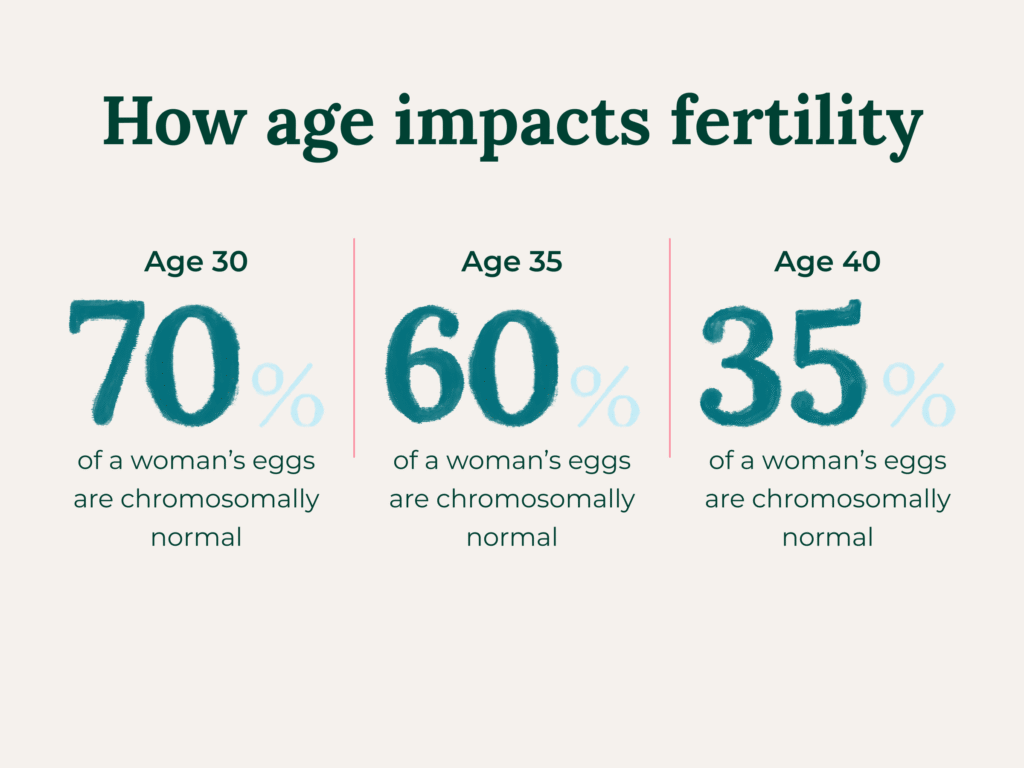
During these conversations, we highlight the role of PGT-A with increasing maternal age. Reproductive aging represents the most significant risk factor to IVF success with the well-documented association between maternal age, chromosomally abnormal conceptions, and pregnancy loss. PGT-A allows for the evaluation of the number of embryonic chromosomes as an embryo selection tool to identify euploid embryos for transfer, thereby reducing the likelihood of pregnancy loss and increasing the probability of a healthy live birth.
Why PGT-A at CCRM?
CCRM Fertility is proud of the reputation we’ve established and maintained in the field of fertility medicine and of how we use IVF with PGT-A for embryo selection responsibly and ethically. Minimizing the burden of infertility by avoiding futile aneuploid transfers that lead to failed implantation, pregnancy loss, and/or aneuploid conceptions offers the possibility of parenthood for so many aspiring patients.
Refer your patients to CCRM to get started with IVF with PGT-A.

CCRM Success Story: How a PMOS (formerly PCOS) diagnosis changed Dana’s IVF journey
Dana W. and her husband, Scott, expected to start their family not...

PCOS Has a Proposed New Name: Polyendocrine Metabolic Ovarian Syndrome (PMOS) — Why It Matters
For decades, millions have been diagnosed with polycystic ovary syndrome (PCOS), one of the...
Laurence Jacobs, MD
Understanding IVF Success Rates: What is SART Data And How to Interpret the Stats
If you’ve been thinking about fertility care, it may seem overwhelming to know where to start with...
Timothy Hickman, MD
CCRM Success Story: How a PMOS (formerly PCOS) diagnosis changed Dana’s IVF journey
Dana W. and her husband, Scott, expected to start their family not long after saying “I do,” but months turned i
PCOS Has a Proposed New Name: Polyendocrine Metabolic Ovarian Syndrome (PMOS) — Why It Matters
For decades, millions have been diagnosed with polycystic ovary syndrome (PCOS), one of the most common endocrine diso
Laurence Jacobs, MD
Understanding IVF Success Rates: What is SART Data And How to Interpret the Stats
If you’ve been thinking about fertility care, it may seem overwhelming to know where to start with so much inform
Timothy Hickman, MD