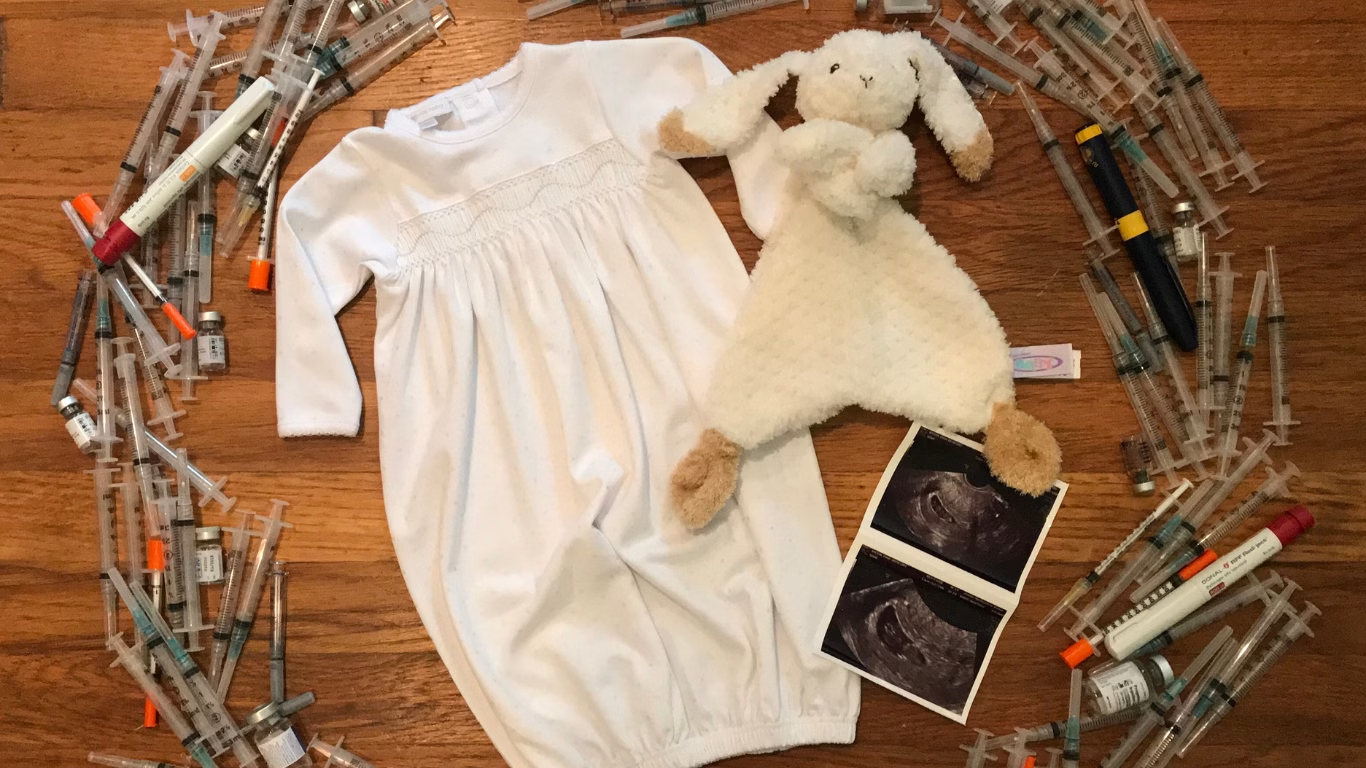
There’s no single path to parenthood; The road to baby will look different for everyone. But for all individuals and couples having their own biological children, the requirements for pregnancy are the same: You need an egg, sperm, and a uterus.
Some couples trying to grow their family have all three components, but others, including LGBTQIA+ individuals and couples, may need support in securing the missing piece(s)—and that’s where fertility care comes in.
Reproductive endocrinologists (REIs), highly trained medical doctors who specialize in fertility, help personalize how these three pieces come together to make your baby while treating patients with inclusive, compassionate care.
Here, as we celebrate Pride Month this June, we’ll discuss the different pathways to parenthood for LGBTQIA+ patients, options available at CCRM Fertility (including donor eggs, donor sperm, and gestational surrogacy), screening requirements, and much more.
The ‘ingredients’ of family building
A healthy egg
Only one single mature egg is required to make an embryo which eventually becomes a fetus and then a baby. The egg can come from:
- An intended parent with ovaries
- An egg donor
Those who may need an egg donor include same-sex male couples, transgender and nonbinary individuals pursuing gender-affirming care, single parents by choice, and people experiencing infertility, including diagnoses like diminished ovarian reserve (DOR) or premature ovarian failure.
Healthy sperm
As with an egg, only one single sperm is needed to fertilize an egg and create an embryo. The sperm can come from:
- An intended parent with testes/sperm
- A sperm donor
Patients considering sperm donation include same-sex female couples, single mothers by choice, transmale persons, and cisgender men with azoospermia, a medical condition in which there is no viable sperm in the semen.
Healthy uterus
The third and final requirement for pregnancy is a womb, a meeting place where the embryo can implant and grow. The person who carries the pregnancy will either be:
- An intended parent with a uterus
- A gestational carrier (GC) or surrogate
Same-sex male partners, single dads, transgender and nonbinary individuals who are unable to carry a pregnancy, and intended parents with recurrent in vitro fertilization (IVF) failures or a medical condition where the female partner can’t carry may consider gestational surrogacy.
Donor conception for LGBTQIA+ families
Donor conception is a meaningful path to build a family, and a common one, too. The National Institutes of Health estimates about 30,000 to 60,000 babies born each year are conceived from donor sperm.
CCRM Fertility has a designated third-party reproduction team who are well-versed in LGTBQIA+ family building, can help guide you in selecting your donor and/or gestational carrier, and offer compassionate support every step of the way.
Sperm donation at CCRM
At CCRM, we partner with reputable, FDA-compliant sperm banks (also known as cryobanks) across the country. All donors are extensively screened beforehand and must follow strict safety regulations (more on this below).
Patients using donor sperm are able to select their donor after some medical testing that the donor is appropriate for them. The sperm is then purchased from the sperm bank, and the sperm vials are sent and stored at our clinic until your IUI or IVF procedure.
- Non directed sperm donation/anonymous, where the intended parent(s) select a donor from a cryobank and donor’s identity is not known at the time of the treatment. This is not allowed in some states due to laws prohibiting anonymous donation, including Colorado
- Non directed/Open-Identity donation (ID Donation), also from a cryobank, where the donor agrees to be contacted by the child once they reach the age of 18
- Known/directed sperm donation, where the sperm is donated by a willing friend or relative rather than anonymously through a bank
Egg donation at CCRM
Using an egg donor at CCRM Fertility is also a highly vetted and regulated process. We have network-wide egg banks with egg donors through which you can view and select. All egg donors have met CCRM’s egg donor eligibility requirements and completed a selective egg donation application process. These eggs are already in cryopreservation, as the donor has usually completed the retrieval process.
CCRM also has an impressive > 90% thaw rate for frozen eggs, according to 2017-2024 data, and innovative technology that helps our egg donor recipients improve their chances of a successful pregnancy and birth.
Screening requirements for egg donors and sperm donors at CCRM
CCRM donors go through extensive screenings by a dedicated team of medical professionals, including physicians, nurses, and genetic counselors, that comply with both FDA and the American Society of Reproductive Medicine (ASRM)’s gamete donation guidelines.
Both egg donors and sperm donors must complete:
- Medical screening
- Family history evaluation
- Genetic testing
- Infectious disease testing
- Psychological evaluation
All sperm donors at CCRM also must agree to “sperm quarantine,” a process through which the sperm is frozen and tested for infectious disease, stored for six months, and then tested again. Since some diseases such as HIV and hepatitis can remain in the system for 180 days, this ensures the highest safety standards and mitigates the risk of spreading disease.
After this quarantine period ends and if testing comes back clear, the sperm is ready to use for treatment.
Gestational surrogacy at CCRM
In gestational surrogacy, a gestational carrier (GC) carries a child conceived via IVF using egg and sperm that may come from the intended parents, donors, or a combination of both.
CCRM has an in-house surrogacy program for patients pursuing treatment at the Colorado flagship location in Lone Tree, although due to longer wait times, most of our patients still work with an outside surrogacy agency to be matched with a gestational carrier.
Like donors, these carriers are rigorously screened to ensure their physical, mental, and psychological health. From there, the steps to the surrogacy process include:
- Make embryos
- Find a surrogate
- Match with your surrogate and perform medical record review and medical evaluation of the surrogate
- Complete the embryo transfer
- Hope for a positive pregnancy test
Gestational surrogacy is a wonderful option for LGBTQIA+ family building and has a 70-80% success rate with preimplantation genetic testing (PGT).
Legal requirements in third-party reproduction
For gestational surrogacy and known donor arrangements, each party (both the intended parents and the carrier/donor) must have its own ART attorney (a lawyer that specializes in assisted reproductive technologies). Legal representation will write up a contract that helps to set clear expectations, and will also:
- Establish legal parentage
- Declare parental rights
- Explain multi-parent legal considerations
- Outline financial and medical obligations
- …and more
These legal agreements protect everyone involved— intended parents, donors, carriers, and the future child. Legal requirements can vary significantly by state, so check with your attorney (and your care team) for specifics for where you live (you can also learn more about the legal perspective of third-party reproduction here).
Other LGBTQIA+ family-building options
Egg freezing, also known as fertility preservation, is another great family-building option for LGBTQIA+ individuals who want to preserve their eggs before gender-affirming treatment to ensure a biological connection to future child(ren).
Fertility preservation is also an empowering choice for anyone who’s not ready to be a parent right now but wants to freeze their youngest and healthiest eggs in case they might need them in the future.
Insurance coverage for LGTBQIA+ fertility treatment
Some state mandates where fertility treatment is covered include LGBTQIA+ individuals. The best way to find out if your state has fertility healthcare coverage or if you have insurance benefits is to talk to your employer.
You can also reference this chart below to see which states have some LGBTQIA+ fertility insurance coverage:

The bottom line
Every pregnancy requires an egg, sperm, and a uterus, but if you don’t have all three of these ‘ingredients,’ there are so many fertility treatment options available to help you have your own biological children.
Whether pursuing egg donation, sperm donation, gestational surrogacy, or any combination of the three, CCRM offers personalized, compassionate care to assist in building the family you want.
If you’re ready to learn more or start your family-building journey at CCRM, call us at (877) 201.6931 or schedule an appointment online at the CCRM location near you.

PCOS Has a Proposed New Name: Polyendocrine Metabolic Ovarian Syndrome (PMOS) — Why It Matters
For decades, millions have been diagnosed with polycystic ovary syndrome (PCOS), one of the...
Laurence Jacobs, MD
Understanding IVF Success Rates: What is SART Data And How to Interpret the Stats
If you’ve been thinking about fertility care, it may seem overwhelming to know where to start with...
Timothy Hickman, MD
CCRM Success Story: A Second Opinion in California for IVF and an FET
CCRM Fertility of Newport Beach patient Hannah D. found IVF success after unexplained...
PCOS Has a Proposed New Name: Polyendocrine Metabolic Ovarian Syndrome (PMOS) — Why It Matters
For decades, millions have been diagnosed with polycystic ovary syndrome (PCOS), one of the most common endocrine diso
Laurence Jacobs, MD
Understanding IVF Success Rates: What is SART Data And How to Interpret the Stats
If you’ve been thinking about fertility care, it may seem overwhelming to know where to start with so much inform
Timothy Hickman, MD
CCRM Success Story: A Second Opinion in California for IVF and an FET
CCRM Fertility of Newport Beach patient Hannah D. found IVF success after unexplained infertility and negative experien