


Dana W. and her husband, Scott, expected to start their family not long after saying “I do,” but months turned into years of waiting and hoping for their chance to become parents.
Throughout that time, Dana struggled with irregular periods, sometimes going months without a cycle, yet still lacked answers about why she wasn’t getting pregnant.
Fertility treatment brought more heartbreak. After three unsuccessful egg retrievals at her former clinic, including one that produced 23 eggs but no blastocysts, Dana was told donor eggs were likely her best path to parenthood.
Moving directly to donor eggs didn’t feel right, and that’s when Dana and her husband, Scott, met with Dr. Sara Barton at CCRM Fertility of Colorado in Denver for a second opinion. After thorough testing, Dr. Barton diagnosed Dana with Polyendocrine Metabolic Ovarian Syndrome (formerly known as PCOS) and came up with a fresh new protocol for her next cycle of IVF.
The couple got five healthy embryos from that cycle, two of which became their daughters, Rhodes and Reeves.
Read on for more on their inspiring success story.
What fertility treatments did you pursue?
We went directly to IVF based on my age, cycles, and recommendation from a local fertility specialist.
What was your fertility diagnosis?
PMOS (formerly PCOS) and egg quality
What was your fertility journey like?
Our fertility journey lasted more than three years and included ovulation medications, countless tests and procedures, one unsuccessful stim cycle, and three unsuccessful IVF cycles before CCRM. Then there was one final IVF cycle that changed our lives. It was physically exhausting, emotionally devastating, expensive, unpredictable, and ultimately more rewarding than we could have imagined.
When did you start your journey?
We started trying to conceive in March 2014, about a month after Scott and I were married. I stopped taking birth control thinking we would start a family fairly quickly (all my friends did!). Instead, one month became six months, then a year, and eventually more than three years.
How did you discover you had infertility?
I had experienced irregular periods my entire life, sometimes going two or three months without one. After a year of trying, we officially “met the definition of infertility” and began more extensive testing.
At first, most of our results looked normal. Scott’s testing was excellent, my tubes were open, and my ovarian reserve looked great. A progesterone test eventually confirmed that I was not ovulating, even while taking Clomid. Later, IVF and genetic testing revealed significant egg-quality issues. From 15 eggs retrieved during our first completed IVF cycle, only one embryo tested chromosomally normal and on our third 23 retrieved eggs resulted in zero embryos.
It was not until we met with CCRM that I was diagnosed with PCOS. Looking back, I had so many of the symptoms, but no one had ever put them together before.
How long were you in treatment prior to CCRM?
I began treatment with Provera and Clomid in September 2014. I moved from my OB-GYN to a reproductive endocrinologist in August 2015, then met with CCRM in December 2016.
By that point, we had been trying for almost three years and had been in active treatment for over two years.
What brought you to CCRM?
After our third IVF cycle produced 23 eggs but no blastocysts, we were told that an egg donor was probably our best chance of becoming parents. That was one of the most painful moments of the entire journey.
Something about moving directly to donor eggs did not feel right, so we sought a second opinion. That doctor reviewed our history and felt we should consider trying IVF one more time. He specifically mentioned CCRM and a great friend of mine had conceived her twins through treatment at CCRM.
We happened to be traveling to Denver for Christmas, so I told Scott that if CCRM could fit us in, I would take it as a sign. They did. Around the same time, my employer changed insurance plans to one CCRM accepted. Then I met Dr. Barton, who reviewed our history, questioned why essentially the same protocol had been used repeatedly, and diagnosed me with PCOS. For the first time in a long time, I felt as if someone was looking at the complete picture and creating a plan specifically for me.
What gave you hope throughout the process?
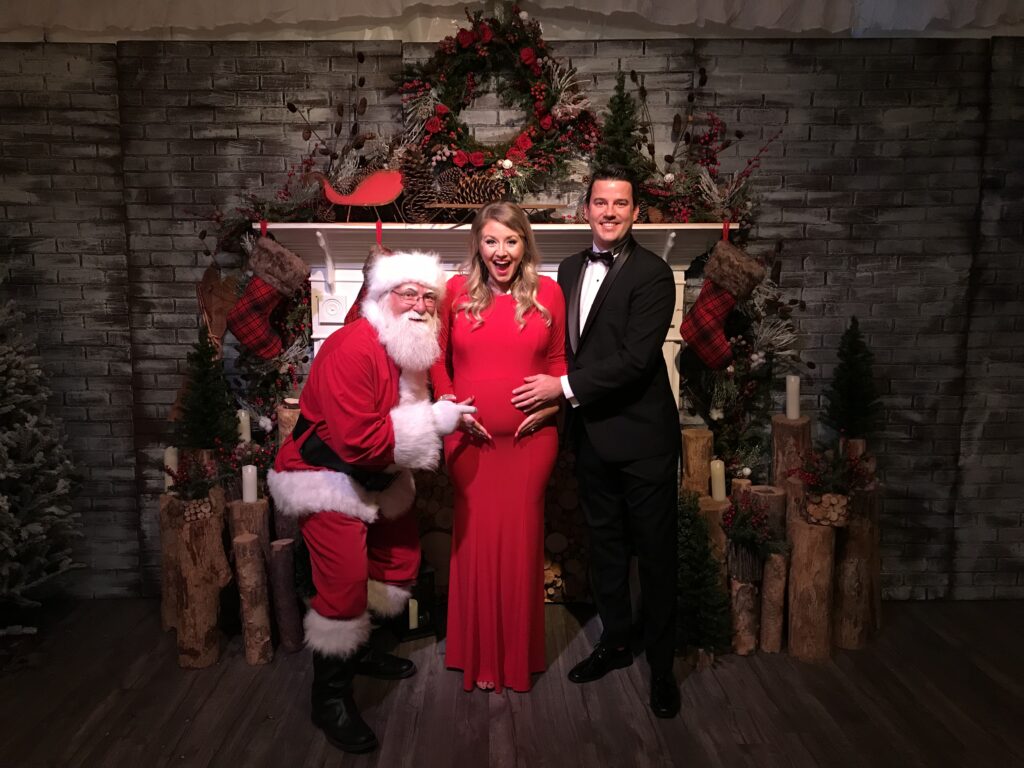
My faith gave me hope, even when I was angry, exhausted, and questioning everything. I prayed for my body, our embryos, our physicians, Scott, and the strength to accept whatever happened next.
Scott was also my constant source of hope. When I was ready to give up, he kept me laughing and reminded me that we would become parents somehow. Our friends and family prayed with us, cried with us, brought wine and flowers after devastating calls, gave me shots while I traveled, and helped us keep going.
The infertility community gave me hope too. Reading other women’s stories reminded me that I was not alone. Eventually, writing my own story helped me process what was happening and allowed me to hope that our journey might help someone else.
What was your treatment experience like? The highs? The lows?
Treatment was a roller coaster in every sense. It affected my body, my emotions, our finances, our schedules, and nearly every conversation in our home.
The lowest points included having our first transfer fail, losing our remaining embryo during the thawing process, experiencing another failed transfer, and then learning that none of the 23 eggs from our third IVF cycle had developed into a blastocyst. Being told we might need an egg donor caused me to have my first panic attack, grieving another failed cycle.
Our experience at CCRM felt different. The testing was thorough, the protocol was individualized, and the staff made us feel confident that every detail mattered. CCRM retrieved 33 eggs, 24 were mature, and 21 fertilized. Five embryos reached the blastocyst stage, and then all five tested chromosomally normal. After previously receiving a call that none of our embryos had survived, hearing that all five were normal was almost impossible to process.
The greatest high was watching one of those embryos being transferred, followed by our first positive pregnancy test and finally that congratulatory call from Dr. Barton (I still have the voicemail).

Was there anything that surprised you on your journey?
I was surprised by how physically demanding IVF could be and how emotionally complicated learning the news of other people’s pregnancies became. I could be genuinely happy for someone while also being completely heartbroken for myself.
Medically, the biggest surprise was learning at CCRM that I had PCOS. No one had ever mentioned it, despite my irregular periods and other symptoms. I was equally (but pleasantly) surprised that after three unsuccessful IVF cycles, a different protocol and laboratory could produce five chromosomally normal embryos.
What helped you along the way?
The support of my husband helped more than anything. He gave injections despite hating needles, took care of me after procedures, enforced bed rest, carried every bag through the airport, and held me through the worst news of our lives.
My family, friends, physicians, nurses, and the infertility community also carried us. And taking occasional breaks from treatment gave us space to breathe and remember that we still had a life together.
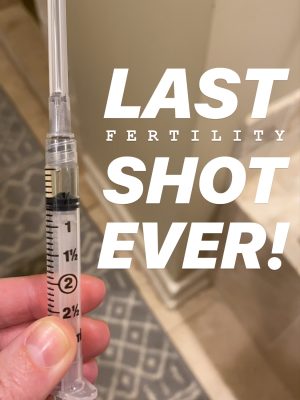
What advice would you give to others on their journey?
Advocate for yourself and do not be afraid to seek another opinion. If the same approach keeps failing, ask why and ask what could be done differently. Finding the right clinic (which in my personal opinion is CCRM, you can ask the 4 other women I recommended going straight there).
Try not to compare your numbers or timeline with anyone else’s. I learned the hard way that Googling every result and looking at other people’s early pregnancy tests usually created more fear than comfort.
Give yourself permission to be sad, angry, hopeful, jealous, grateful, and exhausted, sometimes all in the same day. Set boundaries around baby showers, announcements, and conversations when you need to. Let people help you and try to keep communicating with your partner.
Most importantly, remember that needing treatment is not a personal failure. Infertility is something happening to you. It is not who you are.
Tell us about your little one (s)!
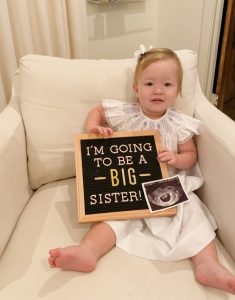
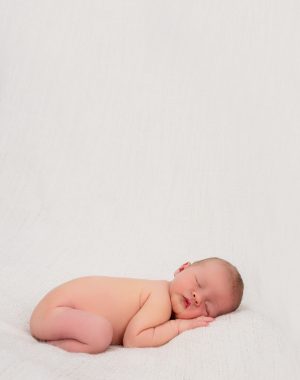
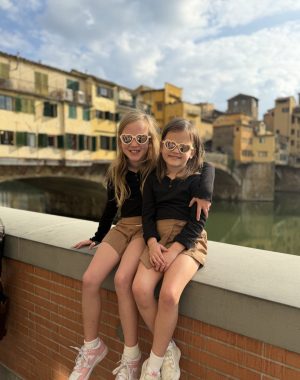
Our first daughter, Rhodes, was born in March 2018. We chose not to learn her sex during pregnancy, although I was convinced she was a girl. Hearing my doctor announce, “It’s a girl!” and then hearing her cry was the best moment of my life.
Rhodes is kind, and smart, and a wonderful friend. She’s also a pro on the soccer pitch.
Our second daughter, Reeves, was also born through IVF in April 2020. She’s our funny, passionate, firecracker. Not a day goes by when she doesn’t make us laugh. They both know the role CCRM paid in their lives. If you ask Reeves where she was when I was pregnant with Rhodes, she’ll exclaim, “in the freezer!”
Together, our girls are the family we spent years praying for and the most beautiful reminder of what science, faith, persistence, and an incredible medical team can make possible.
Anything else you’d like to add?
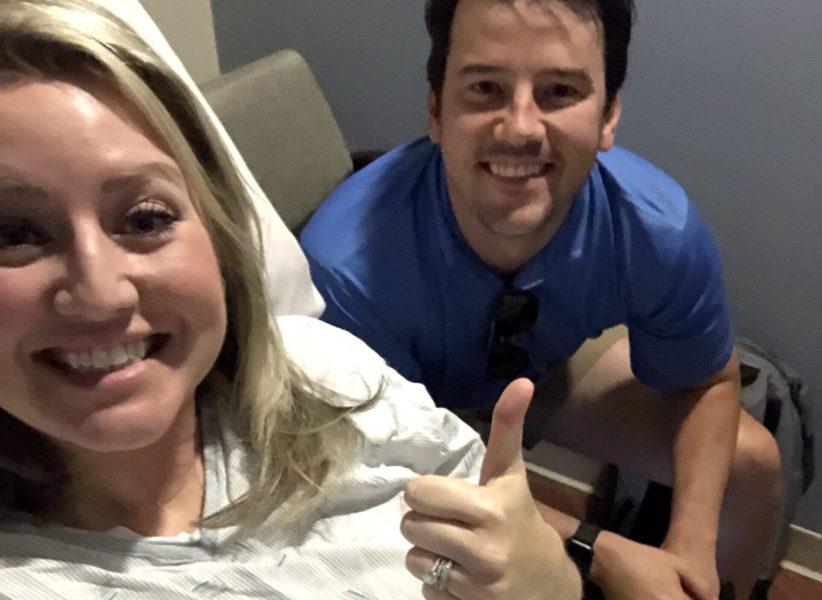
A happy ending does not erase the pain of infertility. I will always remember the negative tests, failed cycles, painful announcements, and the friends who were still waiting when we finally became pregnant.
But I also remember every person who gave us hope. That is why I share our journey so openly. Other women’s stories helped me feel less alone, and I hope ours can do the same for someone else.
CCRM gave us more than a successful cycle. CCRM gave us options when we thought we had reached the end and ultimately helped us build our family. We will always be grateful.


