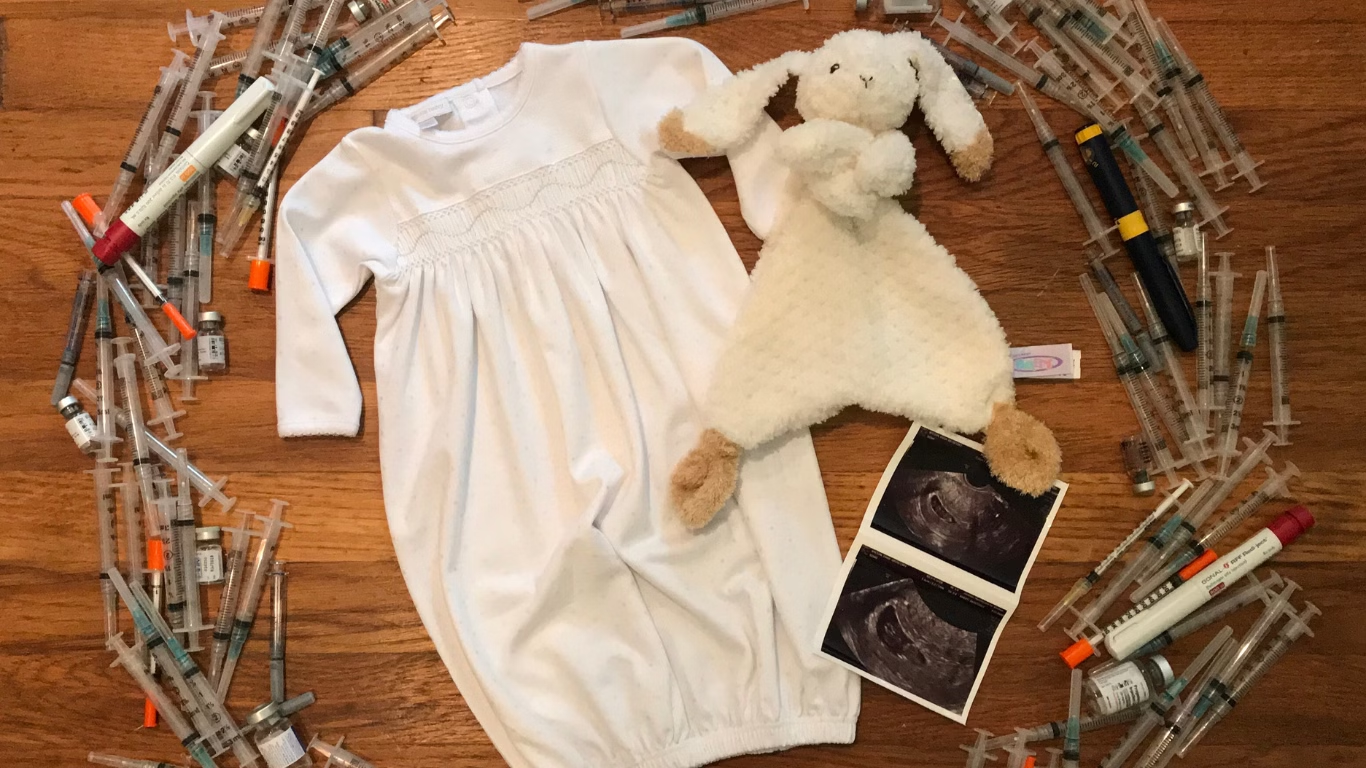
Deciding to seek care from a fertility specialist can feel daunting, but taking the time to make that emotional and financial investment will likely prove to be one of the best decisions you have ever made. Approximately 12–15% of couples in the United States are infertile, so you are definitely not alone.
Until recently, seeking the care of a reproductive endocrinologist, or fertility specialist, was most often sought by those faced with an infertility diagnosis, but that’s just not true anymore. The scope of practice of what an REI does and who they treat has truly expanded. Reproductive Endocrinology & Infertility Specialists (REIs) are the doctors you want to see if you want to manage your reproductive health and fertility potential. REIs work with patients who want to freeze their eggs as a means of fertility preservation; with single women and single men who seek to have a family; with LGBTQIA+ couples and individuals; as well as those who face an infertility diagnosis. These doctors have completed an extra three years of fellowship training after an Obstetrics and Gynecologic residency, specializing exclusively in reproductive medicine.
When should you consider an REI consult?
Even the definition of “infertility” has evolved over time. The traditional clinical benchmark defines infertility as a year of inability to achieve pregnancy after unprotected intercourse — or six months if you’re over the age of 35 — and your OB/GYN would generally advise seeing a fertility specialist once you meet that definition. But you don’t have to wait until you technically meet that criteria to make an appointment. The questions to ask as to whether to make that REI consult may include: do I want to have a child next year? Did I already want to have a child by now (and have been trying) but haven’t conceived yet? If you find yourself saying yes to these questions, at whatever age, then a consultation to find out next steps makes complete sense.
Finding the right REI
Whether you are preserving your fertility or looking to add a child into your life now, finding the right clinic is a deeply personal decision. Most reputable fertility centers will have clear, easy-to-understand content on their websites and social media; look for clinics that walk you through all pathways to parenthood and are transparent about their outcomes and processes.
CCRM’s physicians are fellowship-trained Reproductive Endocrinologists with specialized expertise in Assisted Reproductive Technology, meaning they bring focused, in-depth knowledge to even the most complex cases. CCRM offers a full range of services — from fertility preservation and diagnostics to IVF and third-party reproduction — so patients have access to comprehensive care under one roof. When evaluating your options, success rates are one of the most important factors to understand, but the numbers only tell part of the story. CCRM’s guide to understanding SART success rates can help you ask the right questions and interpret what the data actually means for your situation.
What to expect at your first visit
When you have your first appointment with your REI, plan to cover a lot of ground — be prepared and ask questions. You will probably spend a lot of time at your initial visit, since you will be reviewing your medical history and any testing you (and your partner, if you have one) have already had. A physical exam and ultrasound are often part of the first in-person visit as well. You will receive a relatively standardized checklist of items to complete — bloodwork, ovarian reserve testing, an HSG (hysterosalpingogram), genetic testing, and semen analysis, among other things — so your care team understands you (and your partner) at baseline.
But a critical part of that first visit is the physician discussing what your family goals are. What does “success” in this world of human reproduction look like to you? Once your workup is completed, you’ll follow up with your doctor to finalize a treatment plan.
Find the right REI
A great REI will build an open and trusting relationship with you. They will have a support team that listens and is responsive to your questions and needs — a true partner in your care, experienced in working with both women and men facing fertility challenges.
Even though it may seem daunting to embark on this journey, both your physician and their office staff are trained to make the process as easy as possible and guide you toward the best outcome for you.
For more information on when to seek treatment and how to pick your REI partner, reach out to the CCRM Fertility team through our contact form.